 Work Time
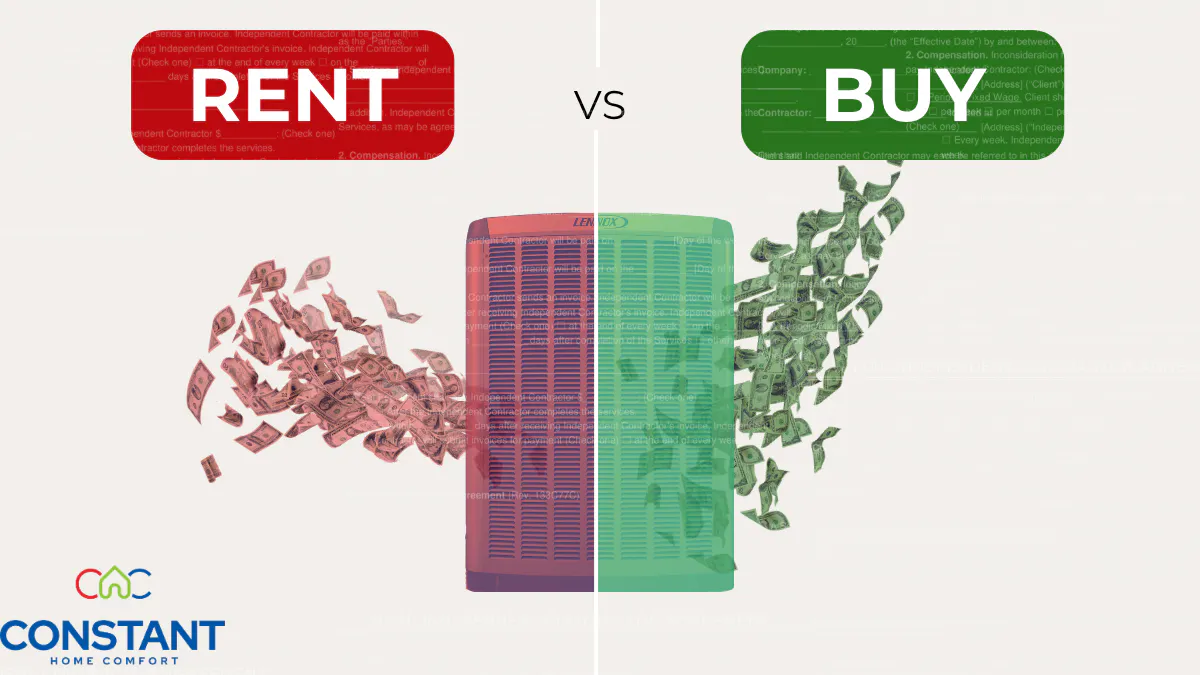
Ontario has one of the most active HVAC rental markets in North America, driven largely by decades of water heater and furnace rental programs from companies like Reliance and Enercare. As heat pumps have grown in popularity, these same companies — and others — have expanded their rental offerings to include central heat pump systems, using the same business model: low or no upfront cost in exchange for long-term monthly payments that far exceed the equipment's value.
The pitch is familiar and deliberately appealing: no large upfront investment, included maintenance coverage, and no repair bills. But the economics behind the monthly payment — and the contract terms buried in the fine print — tell a very different story, especially when you factor in what Ontario homeowners stand to gain through rebate programs that rental customers typically cannot access.
Rental agreements for central heat pump systems generally share the same structure regardless of provider:
- Monthly rental fees: Typically $120 to $200 or more per month for a central ducted heat pump system, depending on the provider, the equipment, and whether an air handler or other components are included in the rental.
- Contract terms: Most agreements run for 10 to 15 years. Many include automatic renewal clauses that extend the contract unless you actively cancel within a narrow window — a detail many customers miss.
- Annual escalation clauses: Contracts frequently allow the provider to increase monthly payments by 2% to 4% per year. A rental that starts at $150 per month can reach $185 to $220 per month within 10 years.
- Early termination fees: Ending the contract before the term expires typically requires paying a buyout equal to the remaining contract value — which in the early years of a 10 to 15-year agreement can amount to several thousand dollars.
- Property lien registration: Most providers register a notice or lien on your home's property title for the value of the rental equipment. This lien must be discharged before your home can be sold without complication.
- Equipment ownership: The rental company owns the equipment for the full duration of the contract. You are paying monthly for the use of their asset — you build no equity and own nothing.
Let's put real numbers to both scenarios for an average Ontario home requiring a mid-range central heat pump installation.
The Rental Scenario
Assume a monthly rental fee of $150 for a central ducted heat pump on a 12-year contract with a 2.5% annual escalation:
- Year 1: $150/month = $1,800/year
- Year 4: approximately $161/month = $1,930/year
- Year 8: approximately $177/month = $2,125/year
- Year 12: approximately $196/month = $2,355/year
- Total paid over 12 years: approximately $24,500 to $26,000
- Equipment ownership at end of term: none — the system still belongs to the rental company
- Buyout cost if you want to own the equipment: additional fee, amount varies by contract
At the end of a 12-year rental, a homeowner has paid approximately $25,000 for a piece of equipment worth $8,000 to $14,000 new — and still does not own it. If the contract auto-renewed for an additional term without the homeowner noticing, those payments continue indefinitely.
The Purchase Scenario
Now compare that to purchasing a quality central ducted heat pump through Constant Home Comfort:
- Typical installed cost for a high-efficiency cold-climate system: $8,000 to $14,000
- Less Canada Greener Homes Grant: up to $5,000 for qualifying systems
- Less Enbridge Home Efficiency Rebate Plus: additional savings for eligible gas customers
- Net cost after rebates: as low as $4,000 to $10,000 for many Ontario homeowners
- With 0% financing over 12 months: approximately $335 to $835 per month for one year only
- After month 12: $0 per month, forever — you own the equipment outright
- System lifespan: 15 to 20 years of ownership with no ongoing payments
Over 12 years, a homeowner who purchases their system pays a fraction of what a renter pays — and they own an asset that adds value to their home rather than carrying a lien against it. The total cost difference across the life of a typical rental contract is often $15,000 to $20,000 or more in the buyer's favour.
This is the detail that rental companies never prominently disclose, and it is the most significant financial disadvantage of renting a heat pump in Ontario.
Government rebate programs — including the Canada Greener Homes Grant of up to $5,000 and the Enbridge Home Efficiency Rebate Plus — are paid to the owner of the equipment. When you rent, the rental company owns the equipment. The rebates go to them, not to you.
This means that by renting instead of buying, you are not just agreeing to pay more over time — you are also forfeiting potentially thousands of dollars in government incentives that were funded by taxpayers and specifically designed to help homeowners like you afford energy-efficient upgrades. The rental company collects those incentives, reduces their own equipment acquisition cost, and still charges you full monthly payments as if none of that money existed.
When you purchase through Constant Home Comfort, every dollar of rebate eligibility flows directly to you. We manage the applications, handle the paperwork, and apply the savings to your invoice so you see the benefit immediately.
This is the issue that catches the most Ontario homeowners off guard — often not until they're already in the process of selling their home.
When you list a property for sale in Ontario, you are legally required to disclose rental equipment that has a lien or notice registered against the title. Prospective buyers then have three choices, none of which are ideal from a seller's perspective:
- Assume the rental contract: The buyer agrees to take over your monthly payments and inherit your remaining contract term. Many buyers — particularly first-time buyers who have been advised by their realtor — refuse to assume rental contracts, especially long-term ones with escalation clauses.
- Require buyout before closing: The buyer insists that the seller pay out the rental contract before the transaction closes. Depending on how much of the contract remains, this buyout can cost thousands of dollars — often coming as a surprise at a time when the seller is already managing closing costs and moving expenses.
- Walk away from the deal: In a competitive market with multiple comparable listings, some buyers simply move on rather than dealing with rental equipment complications. This is a real and documented phenomenon in the Ontario real estate market.
A ducted central heat pump that you own outright, by contrast, is a selling feature — a modern, energy-efficient system with documented service history that buyers recognize as a sign of a well-maintained home. Owned equipment adds to your property's appeal and to its appraised value. Rented equipment is a liability on your title.
The Maintenance Coverage Is Often Worth Less Than You Think
Included maintenance and repair coverage is consistently presented as a key benefit of renting. In reality, quality central heat pump systems from Lennox, Daikin, Bosch, and American Standard come with manufacturer warranties of 5 to 12 years covering parts and labour — and those warranties are available to you as an owner at no additional cost. The maintenance benefit you're being asked to pay for through monthly rental fees may already be available to you for free, or available at a much lower cost through a service plan purchased separately.
The Equipment May Not Be the Latest Model
Rental companies procure equipment in bulk at reduced cost and may install models that are not the most current or most efficient units available. As an owner purchasing through a reputable dealer, you choose the brand and model, select the efficiency tier that makes sense for your home, and receive the latest equipment with full manufacturer warranty coverage. You are not accepting whatever model the rental company has in inventory.
You Cannot Easily Switch to a Better System
If a newer, more efficient system becomes available — or if your needs change — an owner can plan a system upgrade at any time. A renter is contractually obligated to continue payments on the existing equipment for the full contract term. Upgrading early means paying a potentially significant buyout before a new contract can begin.
The Total Cost Compounds Over Time
Annual escalation clauses are designed to be gradual enough that customers don't notice the cumulative impact. A 2.5% annual increase doesn't feel significant from month to month — but compounded over a 12 to 15-year contract, it adds thousands of dollars to your total payments. The rental company's revenue grows every year while the equipment ages and depreciates.
Cancellation Is Harder Than Signing Up
Rental contracts are typically signed at a moment of urgency — your old furnace just failed, it's January, and the salesperson is offering same-day installation with no upfront cost. The terms are rarely read carefully under those conditions. Cancelling a rental contract after the fact requires contacting the provider, obtaining a buyout quote, arranging payment, and following a specific administrative process to have the lien removed from your title. None of this is difficult, but none of it is as simple as the salesperson made signing up sound.
In the interest of a complete and fair analysis, here are the circumstances where a rental arrangement could be justified:
- Extremely short-term occupancy with no financing access: If you know with certainty you are moving within one to two years and genuinely cannot access any financing, a short-term rental might bridge the gap. Be extremely careful about contract terms and ensure there is no automatic renewal that outlasts your occupancy.
- Rental property where you want to transfer maintenance responsibility: Some landlords use rental programs for investment properties specifically to shift maintenance obligations to the rental company. This can make administrative sense, though the economics of renting still typically favour purchasing over a multi-year horizon even for rental properties.
Even in these scenarios, we encourage you to contact Constant Home Comfort first and explore your financing options before signing any long-term rental agreement. Our 0% financing removes the upfront cost barrier that makes rentals seem necessary for most homeowners.
We have structured our purchase options to address every concern that makes rental programs seem attractive:
0% Financing for 12 Months: No large upfront payment required. Spread the cost over 12 months with zero interest — then own your system outright with no further payments.
Longer-Term Financing Available: For homeowners who need more time, we offer extended financing options. Ask us about current plans when you request your quote.
Full Rebate Access: As the equipment owner, every available government and utility rebate flows directly to you. We handle all paperwork and apply the savings transparently to your invoice.
Best Prices in Ontario: Transparent, competitive, all-in pricing with no hidden fees, no annual escalation, and no contract term. You know exactly what you're paying and when it ends.
Top Brand Selection: Lennox, Daikin, Bosch, and American Standard — you choose the system that fits your home and your budget, not whatever the rental company has available.
Certified Installation: Every installation performed by licensed, factory-trained technicians to manufacturer specifications — protecting your warranty and your investment.
Maintenance and Protection Plans: We offer service plans that provide the same peace of mind as rental maintenance coverage — without the 10 to 15-year financial commitment.
Some providers market central heat pump systems as rent-to-own — you make monthly payments with the intention of eventually owning the equipment after the term ends. These programs sound like a middle ground between renting and buying, but the economics rarely support them.
In a typical rent-to-own arrangement, the total amount paid by the end of the ownership transfer period is 150% to 200% or more of what the system would have cost to purchase outright — even before factoring in the rebates that a direct purchaser would have received. The ownership transfer at the end of the term is a marketing feature designed to make an expensive rental contract feel like progress toward an asset. It is not a substitute for buying.
If you are evaluating a rent-to-own offer, ask the provider for the total amount you will pay by the time ownership transfers. Compare that number — honestly and directly — against a purchase price plus financing costs, after rebates. The numbers rarely make rent-to-own look attractive.
If you are currently renting a heat pump or furnace under an existing contract and want to explore your options, here is what you need to know:
- Request a buyout quote: Contact your rental provider and ask for the current buyout amount — the cost to end the contract and take ownership of the equipment or have it removed. This number changes over time as the remaining term decreases.
- Compare the buyout to your alternatives: Once you have the buyout amount, call Constant Home Comfort. We can help you calculate whether paying the buyout and installing a new owned system — with available rebates — makes financial sense versus continuing to pay rental fees.
- Check your contract for renewal dates: If your contract is approaching its end or a renewal window, you may have the option to exit without a full buyout if you act within the cancellation notice period. Read your contract carefully and act before the renewal date if you want to exit.
- Disclose to your realtor if selling: If you are planning to sell your home, inform your realtor about any rental equipment as early as possible. They can advise you on how to handle it in the transaction and whether a buyout before listing makes sense for your situation.
Can the rental company force me to keep renting indefinitely?
Not forever — but the contract terms can make exiting painful and expensive, especially in the early years. Most contracts have a set term after which you have the right to exit with proper notice. The problem is automatic renewal clauses that restart the term if you don't cancel within a narrow window. Read your contract carefully and set a calendar reminder before your renewal date if you want to exit at the earliest opportunity.
Will a rental company come and remove the equipment if I stop paying?
Yes — rental equipment remains the property of the rental company, and they have the right to repossess it if you default on payments. This is distinct from equipment you own, where no third party has any claim. Beyond repossession risk, defaulting on a rental agreement can also result in collection action and impact your credit. If you are in financial difficulty with a rental contract, contact the provider directly to discuss your options before defaulting.
Does the rebate really go to the rental company and not me?
Yes. Government rebate programs — Canada Greener Homes and Enbridge incentives — pay the equipment owner. When you rent, the rental company is the owner of record and receives any applicable rebates. As a buyer, you are the owner of record from day one and receive all rebates in full. This is not a technicality — it is a meaningful financial difference worth thousands of dollars.
I was told the rental price already reflects the rebate savings. Is that true?
This claim is worth scrutinizing carefully. Rental companies may use rebates to reduce their own equipment acquisition cost, and they may or may not pass any of that saving through to you in the form of a lower monthly fee. Even if they do, you have no way to verify how much the rebate was or whether you received fair value for it. When you purchase through Constant Home Comfort, rebates are applied transparently to your invoice — you see the exact amount of every incentive, and it is yours in full.
Is 0% financing the same as renting?
No — they are fundamentally different. With 0% financing, you are purchasing the equipment and paying for it over time at no interest cost. At the end of the financing term, you own the system outright, with no further payments. With renting, you never own the equipment, payments continue for the full contract term and potentially beyond, and the rental company collects rebates on your behalf. Financing is a path to ownership. Renting is a path to perpetual monthly payments.
Renting a ducted central heat pump in Ontario means paying far more over time than the equipment is worth, forfeiting thousands of dollars in rebates that should be yours, creating a complication on your property title that can affect home sales, and ending up with nothing to show for a decade or more of payments.
Buying through Constant Home Comfort gives you full ownership of a quality central heat pump from a leading brand, access to every available government rebate, 0% financing to minimize the upfront commitment, and the freedom that comes from knowing your equipment is paid for and yours — no monthly fees, no contract terms, no lien on your property.
The math consistently and decisively favours buying. We're here to make it easy.
Call us for a free quote: 1 (888) 675-5907
Visit: constanthomecomfort.com
Serving Toronto, GTA, Hamilton, Ottawa, London, Barrie, Waterloo, Burlington, and all of Ontario.