 Work Time
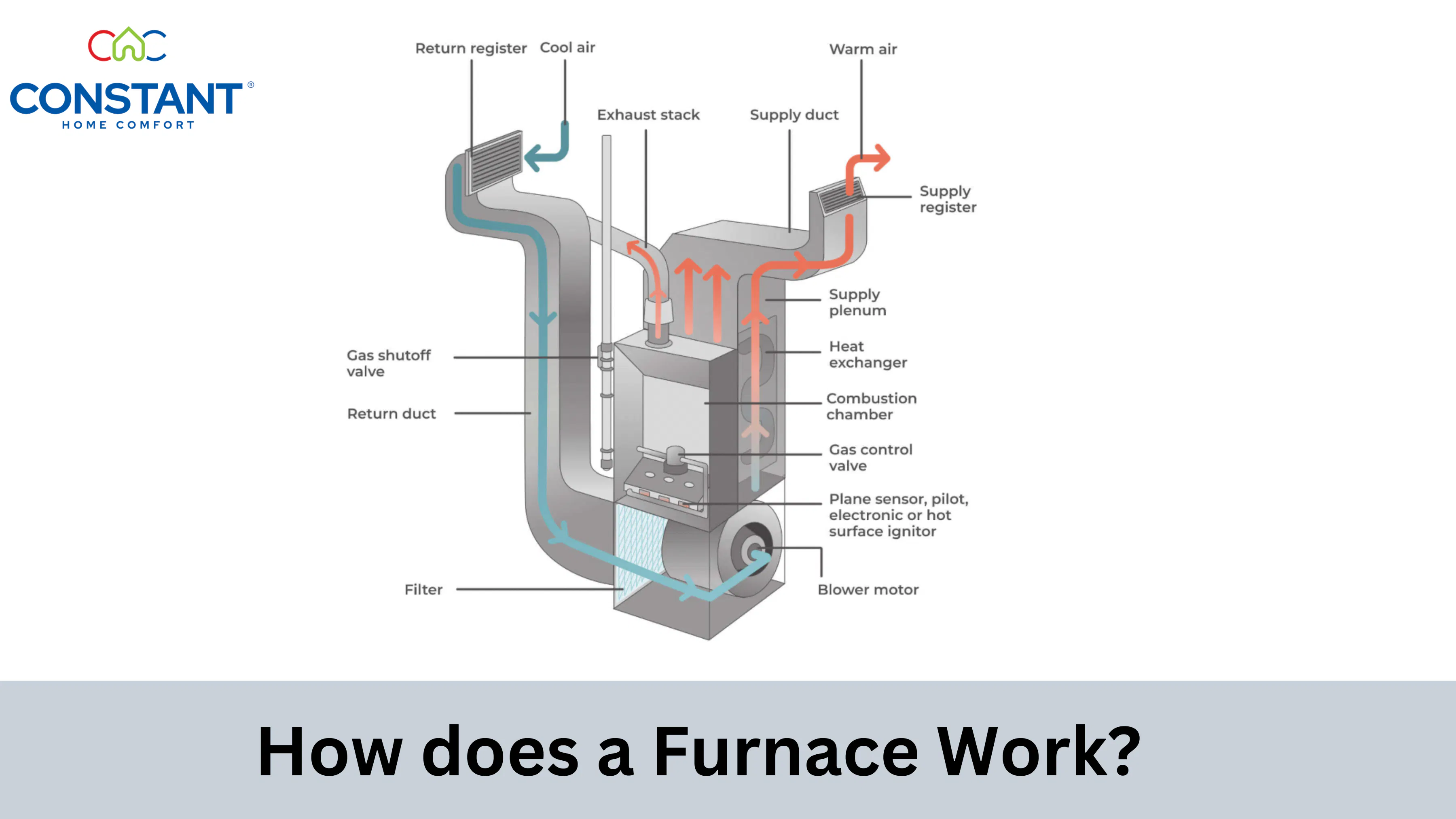
The furnace system starts when the thermostat detects a drop below the set temperature and signals the furnace. The control board then powers the inducer fan, which creates a draft to clear any leftover exhaust (and to draw fresh air). The furnace opens its gas valve and activates the ignitor (either a standing pilot or hot-surface ignitor). As gas burns in the burner assembly, the flame heats the heat exchanger – a metal chamber that transfers heat without letting combustion gases mix with the air stream. Once the heat exchanger is hot enough, the blower motor (blower fan) turns on and draws cool return air through the air filter, across the hot heat exchanger, and pushes the warmed air into the ducts. From there the warm air is delivered to rooms via vents. Meanwhile, combustion byproducts (CO₂, water vapor) are vented safely outside through the flue pipe or venting system (corrugated metal or PVC) by the inducer/fan (in modern condensing units, a secondary exchanger extracts additional heat before venting).
Furnaces are categorized by heat-output control: single-stage, two-stage, and modulating.
- Single-stage furnaces have one heat output (on or off). They heat at full capacity whenever on, then turn off. They are simple and lowest-cost, but can cause temperature swings and run at peak output even when not needed. Typical AFUE is 80–85% (non-condensing models). They suit milder climates or tight budgets.
- Two-stage furnaces have two levels (low and high output). In moderate cold, they run at ~60–70% power for quieter, more even heat. For extreme cold, they fire at 100%. This improves comfort and efficiency. AFUE usually 90–96% (most are condensing models). Two-stage is ideal for variable climates.
- Modulating (variable-capacity) furnaces continuously adjust flame and fan speed over a wide range (e.g. 40%–100%). They keep indoor temperature extremely steady and maximize AFUE. Top-end units reach 96–99% AFUE. These are best for very cold regions and those wanting top efficiency and comfort (CHC’s premium Lennox models, for example).
Another key distinction is non-condensing vs condensing furnaces. Non-condensing (older or budget models) exhaust hot flue gases (up to 140°C) and have lower AFUE (80–83%). Condensing furnaces use a second heat exchanger to cool exhaust gas and condense water out, extracting extra heat. This pushes AFUE above 90% (often 92–98%). As the Bryant guide notes, “today’s top-performing systems reach up to 98.5% AFUE”. Condensing units vent using PVC pipes and include a condensate drain.
Modern furnaces include multiple safety devices. For example, limit switches and flame sensors protect against unsafe conditions. A limit switch (also called rollout switch) monitors heat exchanger temperature; if the exchanger overheats (or flame rolls out), it shuts off the gas to prevent fires. A flame sensor detects if burners have actually lit; if no flame is sensed, it kills the gas flow to avoid unburned fuel.
Pressure switches ensure proper venting: they detect if the inducer fan is pulling enough draft; if blocked venting or inducer failure occurs, the pressure switch shuts off the gas supply.
Owners should also install a carbon monoxide (CO) detector near the furnace. CO is an odorless byproduct of combustion that can leak if there is vent blockage or heat exchanger cracks. As experts note, “Carbon monoxide is… deadly… Furnaces are one possible source of carbon monoxide leaks, so it’s important to have a detector”.
Constant Home Comfort emphasizes professional installation to avoid gas leaks, CO hazards, and ensure all safety standards are met.
Routine maintenance keeps a furnace running safely and efficiently. Key tasks include:
- Changing the filter regularly (monthly or per manufacturer) to ensure good airflow. A dirty filter makes the blower work harder and can cause overheating (tripping the limit switch).
- Annual tune-ups by an HVAC technician: cleaning burners, inspecting heat exchanger (for cracks or soot), checking ignition and sensors, lubricating moving parts, and verifying venting. CHC offers a Furnace Maintenance Plan for yearly service.
- Check the condensate line on condensing furnaces. If this PVC drain clogs or freezes, it can trip a switch and shut the furnace off.
Common furnace problems include: no heat (could be thermostat issue, no gas, faulty ignitor or flame sensor), short-cycling (turning on/off rapidly due to overheating or oversized unit), or uneven heating (duct issues or thermostat placement). For instance, a cracked heat exchanger (rare on new furnaces) can leak CO and requires immediate replacement. CHC cautions that even after installation, “post-installation checks and tests” ensure proper operation.
On efficiency: older furnaces (20+ years) often run at only ~60% AFUE, so upgrading can save energy. CHC recommends ENERGY STAR-rated furnaces. High-EFUs often use variable-speed blowers and advanced controls, delivering smoother heating with fewer hot/cold spots.
Safety Tip: Always turn off power and gas before inspecting the furnace. If you smell gas or suspect CO, shut off the furnace and contact CHC immediately.
Q1: How often should I have my furnace serviced?
At least once per year. An annual inspection by a certified technician (like CHC’s team) prevents major breakdowns. They will test combustion, clean components, and check safety switches. Regular service maintains efficiency and warranty.
Q2: What is AFUE and why is it important?
AFUE (Annual Fuel Utilization Efficiency) measures how much fuel is converted to heat. A furnace with 95% AFUE turns 95% of fuel into heat; the rest is lost up the exhaust. Higher AFUE means lower fuel bills. In Canada, modern high-efficiency furnaces are 90–98% AFUE.
Q3: Are condensing furnaces better?
Yes, they extract more heat from the fuel. Condensing units use a second heat exchanger to cool exhaust and capture extra heat, yielding AFUE above 90%. They require PVC venting and handle condensate (water). For long-term savings in Ontario’s cold climate, condensing furnaces (often two-stage or modulating) are generally recommended.
Q4: Why does my furnace keep running and not reach a set temperature?
Possible reasons: a dirty filter restricting airflow; incorrect thermostat wiring; a faulty limit switch; or a severely undersized or leaking duct system. Ensure filters are clean and ductwork is insulated. If issues persist, CHC can diagnose and correct airflow or control problems.
Q5: What is the purpose of the inducer fan?
The inducer fan (inducer motor) creates draft before ignition. It clears out any residual combustion gases from the last cycle and ensures proper fresh air intake. This pre-purge allows safe ignition and efficient combustion. As CHC explains, it “helps remove combustion gases from the combustion chamber… guaranteeing fuel is burned properly”.
Stay warm this winter with a reliable, high-efficiency furnace from Constant Home Comfort. Call us at 1-888-675-5907 or visit our website to get a free quote in Toronto and across Ontario. Our certified technicians will install or service your Lennox, Daikin, Goodman, Bosch or other top-brand furnace to maximize your home comfort, efficiency and safety. We serve all of Toronto, Mississauga, Hamilton, Ottawa, and nearby areas with 24/7 support.