 Work Time
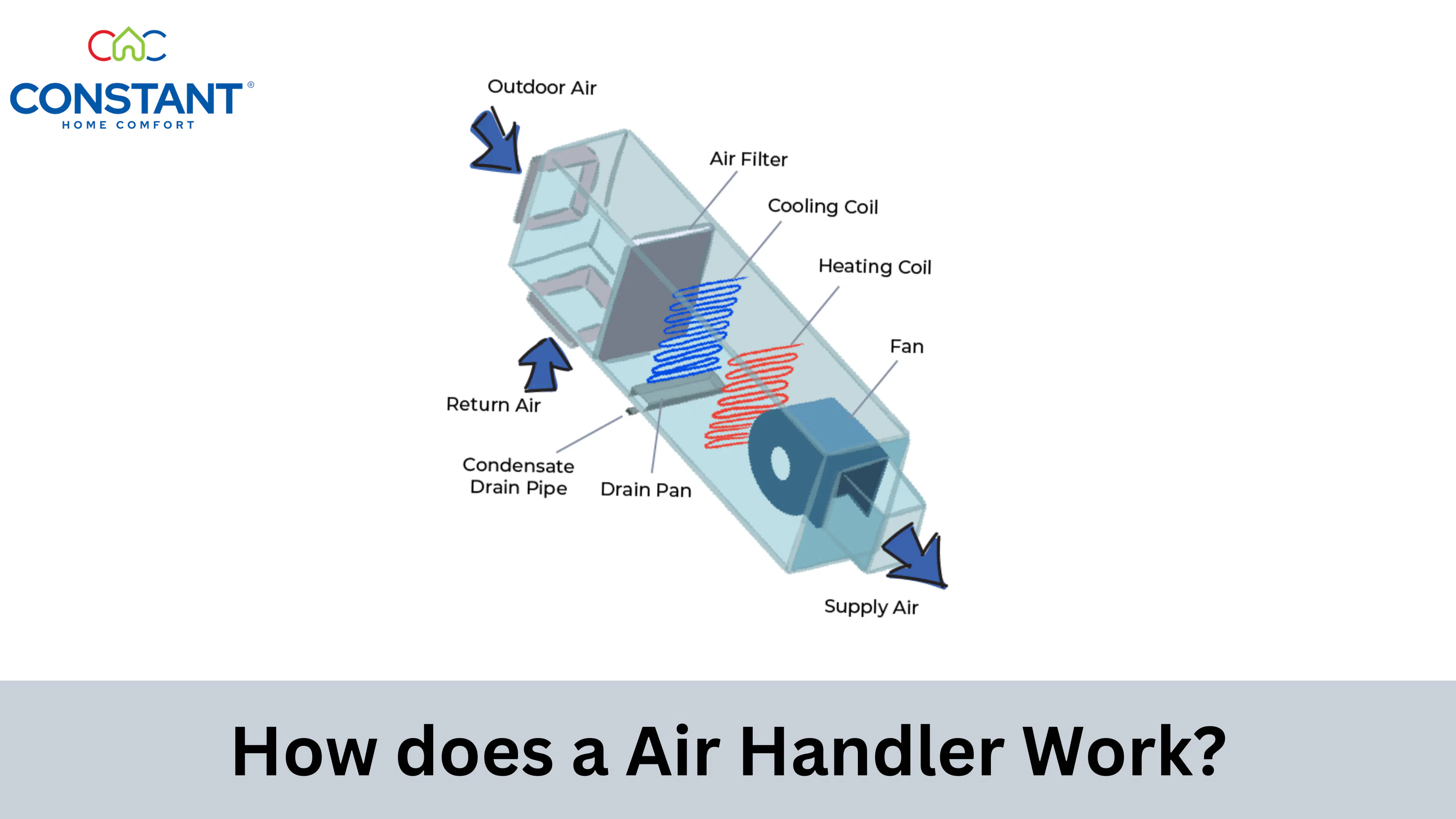
If you’ve ever seen a large metal cabinet tucked in your utility room, basement, or attic and wondered what it does — that’s likely your air handler. It’s one of the most important but least-understood parts of your home’s HVAC system. At Constant Home Comfort, we install, repair, and maintain air handlers for homeowners across the Greater Toronto Area, Hamilton, Ottawa, London, Waterloo, and beyond. This guide breaks down exactly how an air handler works, what’s inside one, and what to do if yours needs attention.
An air handler — also called an Air Handling Unit (AHU) — is an indoor component of your home’s heating and cooling system. Its primary job is to circulate, condition, and distribute air throughout your home via your ductwork (or, in ductless systems, directly into individual zones).
Think of it this way: your outdoor unit (heat pump or air conditioner) does the work of heating or cooling refrigerant, but it’s the air handler that actually moves that conditioned air into the rooms you live in. Without it, your HVAC system simply has no way to deliver comfort where it matters.
Air handlers work alongside heat pumps, central air conditioners, and in some cases electric heating coils — making them versatile and essential for both ducted and ductless systems.
1. Blower / Fan Motor
The blower is the heart of the air handler. This motorized fan draws air in from your home through the return ducts, pushes it over the coil to be heated or cooled, and then sends it back out through the supply ducts into your living spaces. Modern variable-speed blowers are quieter and far more energy-efficient than older single-speed models.
2. Evaporator Coil (Cooling Coil)
When paired with an air conditioner or heat pump in cooling mode, the air handler contains an evaporator coil filled with refrigerant. Warm air from your home passes over this cold coil, transferring heat away and leaving the air noticeably cooler before it’s recirculated. This is also where dehumidification naturally occurs — moisture in the air condenses on the cold coil and drains away.
3. Heating Elements
In electric air handlers, heating strips (resistance coils) provide supplemental or primary heat. When paired with a heat pump, the air handler may also contain a backup electric heater for extremely cold days — this is especially relevant in Ontario winters, where outdoor temperatures can dip well below -20°C.
4. Air Filter
Every air handler includes at least one filter to capture dust, pollen, pet dander, and other airborne particles before the air is redistributed through your home. Regularly replacing or cleaning this filter is one of the single most important maintenance tasks for keeping your system running efficiently and protecting your indoor air quality.
5. Dampers
Dampers are adjustable plates inside the unit (and ductwork) that regulate airflow to different areas or zones of your home. In zoned systems, motorized dampers open and close based on thermostat signals, directing conditioned air exactly where it’s needed.
6. Drain Pan & Condensate Line
When the air handler operates in cooling mode, moisture removed from the air collects in a drain pan beneath the evaporator coil and exits through a condensate drain line. A clogged drain line is one of the most common causes of water damage near HVAC equipment — regular maintenance checks this every season.
7. Cabinet / Housing
All of these components are housed inside an insulated metal cabinet that reduces heat loss, minimizes noise, and protects the internal parts. The cabinet is typically installed vertically or horizontally depending on the space available in your home.
Understanding the airflow cycle makes it easy to see why the air handler is so central to your home’s comfort:
Step 1 — Return Air is Drawn In
Your thermostat signals the system to run. The air handler’s blower motor activates and draws in warm (or cool) air from your living spaces through the return air grilles and back to the unit.
Step 2 — Air Passes Through the Filter
Before doing anything else, the incoming air passes through the filter, where dust, allergens, and particles are captured. Clean filters mean cleaner air and a more efficient system.
Step 3 — Air is Conditioned (Heated or Cooled)
The filtered air passes over the evaporator coil (for cooling or heat pump operation) or electric heating elements (for heating). This is where the air reaches the temperature your thermostat has called for.
Step 4 — Conditioned Air is Distributed
The blower pushes the now-conditioned air through your home’s supply ductwork (or directly into rooms in a ductless setup), delivering even, consistent comfort to every area of your home.
Step 5 — The Cycle Repeats
The cycle continues until your thermostat reads the target temperature, at which point the system shuts off — or modulates down in variable-speed systems to maintain steady comfort with minimal energy use.
This is one of the most common questions we get at Constant Home Comfort. Here’s the simple breakdown:
A furnace generates heat by burning natural gas (or using electric resistance elements). It has its own built-in blower and is a complete, self-contained heating unit.
An air handler does NOT generate heat on its own. Instead, it works as the indoor distribution partner for an outdoor unit — most often a heat pump or central air conditioner. The air handler handles the airflow; the outdoor unit handles the actual heating or cooling of the refrigerant.
When do you need an air handler instead of a furnace?
- If your home uses a heat pump as the primary heating and cooling source
- If you have an all-electric home (no gas line)
- If you want a ductless mini-split system (each indoor head is a type of air handler)
- If you want separate zoned temperature control in different areas of your home
In some homes, both exist: a furnace for primary heating and an air handler for cooling-season operation with a central air conditioner.
Ducted Air Handlers
Traditional air handlers connect to a full network of ducts throughout your home. They are typically installed in a basement, utility closet, or attic. This is the most common setup in Ontario homes and works well when ductwork is already in place.
Ductless Air Handlers (Mini-Split Indoor Units)
Ductless air handlers — the wall-mounted or ceiling-cassette units you see in mini-split systems — perform the same function as a ducted air handler but without the ductwork. Each indoor unit conditions and delivers air directly to one room or zone. They’re ideal for:
- Additions and finished basements
- Homes without existing ductwork
- Second-floor bedroom comfort
- Precise zone-by-zone temperature control
Constant Home Comfort supplies and installs both ducted and ductless air handlers across Ontario, and we carry leading brands including Lennox, Samsung, Mitsubishi, LG, Panasonic, GREE, and more.
Not sure if your air handler is working properly? Watch for these warning signs:
- Weak or uneven airflow from vents throughout your home
- Unusual noises — squealing, rattling, banging, or humming from the unit
- Ice buildup on the evaporator coil or refrigerant lines
- Water pooling near the unit (clogged condensate drain)
- Short cycling — the system turns on and off repeatedly without reaching temperature
- Higher energy bills with no change in usage patterns
- Poor indoor air quality — more dust, humidity issues, or allergy flare-ups
- System is 10–15+ years old — older units lose efficiency and reliability significantly
If you notice any of these in your GTA home, call us at 1-888-675-5907 — we offer same-day and emergency service across Ontario.
Air handler costs in Ontario vary depending on the size of your home, the type of unit (ducted vs. ductless), the brand, and the scope of installation required. As a general guide:
- Ductless air handler (indoor mini-split unit): typically included in the full mini-split system cost
- Ducted air handler replacement: parts and labour can range from several hundred to over a thousand dollars, depending on unit size and any additional work required
- Full system installation (air handler + heat pump or AC): varies significantly by home size, brand, and any required ductwork modifications
At Constant Home Comfort, we believe in transparent pricing and no surprises. We provide on-site quotes, apply all available government rebates and manufacturer promotions to your final price, and offer 0% financing options (O.A.C.) so your upgrade is as affordable as possible.
Call 1-888-675-5907 for a same-day free quote across the GTA and Ontario.
- 24/7 emergency repair service — we’re available day and night, including weekends and holidays
- Same-day installation available across the Greater Toronto Area
- Top-rated on BBB, HomeStars, and ReviewBuzz — trusted by thousands of Ontario homeowners
- Industry-leading brands — Lennox, Samsung, Mitsubishi, GREE, Panasonic, LG and more
- Certified HVAC technicians trained to diagnose, install, and maintain all types of air handlers
- Manufacturer-approved parts in stock for fast, same-day repairs
- Government rebates handled for you — we do the paperwork so you get the savings
- $0 down, 0% interest financing available (O.A.C.)
- Serving all of Ontario: Toronto, Markham, Vaughan, Scarborough, Mississauga, Richmond Hill, Newmarket, Aurora, Burlington, Oakville, Hamilton, Ottawa, Waterloo, London, Barrie, Durham, Kanata, and more
Does an air handler work without a heat pump or AC?
An air handler is designed to work alongside an outdoor unit such as a heat pump or central air conditioner. Without a paired outdoor unit or internal heating elements, the air handler can circulate air but cannot heat or cool it. Electric air handlers with built-in resistance heaters can provide some standalone heating.
How often should an air handler be serviced?
We recommend a professional inspection and tune-up at least once a year — ideally before heating season. The air filter should be checked monthly and replaced every 1–3 months depending on your household (pets, allergies, and local air quality all affect this frequency).
Can I install an air handler myself?
Air handler installation involves refrigerant connections, electrical wiring, and ductwork — all of which require licensed technicians in Ontario. Improper installation can void your warranty, reduce efficiency, and create safety hazards. Always use a certified HVAC contractor.
What size air handler do I need for my Ontario home?
Sizing depends on your home’s square footage, insulation levels, number of floors, and local climate. Our technicians perform a proper load calculation (Manual J) to recommend the right unit — oversized or undersized equipment causes comfort problems and higher energy costs.
Are there rebates available for air handler installation in Ontario?
Yes! Depending on the system type and your home’s eligibility, you may qualify for rebates through programs such as the Home Renovation Savings Program, the Canada Greener Homes Grant, or utility-specific rebates. Constant Home Comfort will assess your eligibility and handle all the rebate paperwork.
How long does an air handler last?
With proper maintenance, a quality air handler typically lasts 15–20 years. Neglected units may fail much earlier. Annual servicing and regular filter changes are the biggest factors in extending your unit’s lifespan.
Whether you’re troubleshooting an existing unit or planning a full system upgrade, Constant Home Comfort is Ontario’s trusted source for air handler installation, repair, and maintenance. We offer same-day service, upfront pricing, and access to the best brands and government rebates available.
Call us anytime — 24/7 — at 1-888-675-5907
Serving: Toronto | Markham | Vaughan | Scarborough | Mississauga | Richmond Hill | Newmarket | Aurora | Hamilton | Ottawa | Waterloo | London | Barrie | Burlington | Durham | Kanata | and all of Ontario