 Work Time
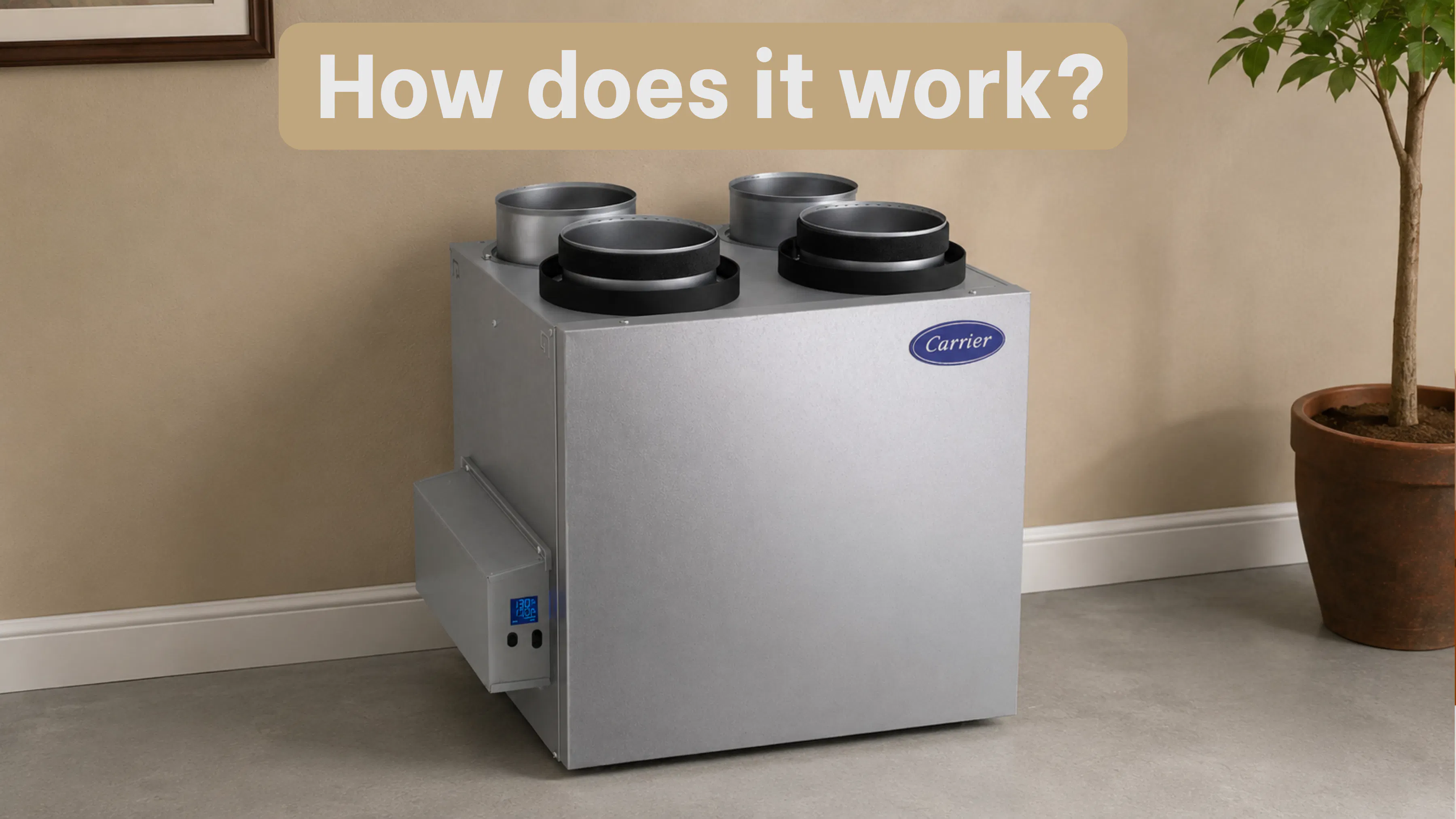
If your home feels stuffy, smells stale, or you've noticed condensation building up on your windows, poor indoor air quality could be the culprit. Modern homes in Ontario are built tightly sealed for energy efficiency — but that also means less fresh air circulates naturally. A home ventilator solves exactly this problem, and understanding how it works can help you make the best decision for your household.
At Constant Home Comfort, we supply and install both HRV (Heat-Recovery Ventilators) and ERV (Energy-Recovery Ventilators) from top brands across the GTA, Hamilton, Ottawa, London, Waterloo, and Windsor. Here's everything you need to know.
A home ventilator is a mechanical device that continuously exchanges stale indoor air with fresh outdoor air — without wasting the energy already used to heat or cool your home. It's part of your HVAC system and plays a critical role in your home's Indoor Air Quality (IAQ).
Unlike simply opening a window, a ventilator filters incoming air, transfers heat or humidity from outgoing air, and keeps your home comfortable and energy-efficient year-round. This makes them especially important in Ontario's cold winters and humid summers.
There are two types of residential ventilators commonly installed in Canadian homes:
HRV – Heat-Recovery Ventilator
An HRV transfers heat from the warm exhaust air leaving your home to the cold fresh air coming in. In winter, this means the incoming fresh air is pre-warmed before it enters your living space — reducing the load on your furnace and saving you money on heating bills.
HRVs are ideal for homes in colder, dryer climates (like most of Ontario), where excess indoor humidity is already a concern. They let moisture escape with the exhaust air while capturing heat.
ERV – Energy-Recovery Ventilator
An ERV transfers both heat and moisture between the incoming and outgoing airstreams. In summer, it helps prevent humid outdoor air from increasing your cooling load. In winter, it retains some indoor moisture to keep your home from becoming too dry.
ERVs are the better choice for homes with higher humidity levels or in mixed-climate regions where summer humidity management is equally important as winter heat retention.
Whether you have an HRV or ERV, the core operating process is very similar. Here's what happens every time your ventilator runs:
- Stale air is pulled out. The ventilator draws in stale, polluted indoor air — full of CO2, cooking odours, moisture, and household chemicals — from high-humidity areas like bathrooms, kitchens, and laundry rooms.
- Fresh air is drawn in. Simultaneously, fresh air from outside is pulled in through a separate intake duct.
- Heat (and in ERVs, moisture) is exchanged. The two airstreams pass through a heat-exchange core. They never mix, but thermal energy transfers from one stream to the other — warming the incoming air in winter, or cooling it in summer.
- Air is filtered. Most ventilators include filters that remove dust, pollen, and other particles from the incoming fresh air before it enters your home.
- Conditioned fresh air is distributed. The pre-conditioned fresh air is distributed throughout your home via your existing ductwork, or through dedicated ventilation ducts.
The result is a constant, balanced flow of fresh air without the energy penalty of simply opening a window — and without the discomfort of cold drafts or humidity fluctuations.
- Healthier indoor air. Continuously flushes out allergens, mould spores, VOCs (volatile organic compounds), and CO2 that accumulate in tightly sealed homes.
- Lower energy bills. By recovering up to 80% of the heat from exhaust air, an HRV or ERV dramatically reduces the energy your furnace or air conditioner needs to condition incoming air.
- Reduced condensation and moisture damage. Proper ventilation keeps humidity levels balanced, preventing condensation on windows and protecting your home's structure and finishes.
- Year-round comfort. Fresh air without cold drafts in winter, and pre-cooled air without extra humidity in summer.
- Required by Ontario Building Code. New construction in Ontario requires mechanical ventilation, making HRVs and ERVs a standard part of modern homes.
You may benefit from a home ventilator if you notice any of the following signs:
- Persistent musty or stale odours indoors
- Condensation or frost on windows, especially in winter
- High indoor humidity levels above 55% in summer
- Family members experiencing frequent allergy or asthma symptoms indoors
- A recently renovated or newly built, well-sealed home
- Mould or mildew growth in bathrooms, closets, or the basement
If any of these apply to your home, a professional assessment from Constant Home Comfort can identify the right solution for your specific situation.
Choosing between an HRV and an ERV depends primarily on your home's typical indoor humidity and your local climate:
- Choose an HRV if you live in a colder region, have a tightly built home that tends to be humid in winter, or are looking for maximum heat recovery efficiency.
- Choose an ERV if your home tends to be very dry in winter and you want to retain some moisture indoors, or if you're in an area where summer humidity management is equally important.
Not sure which one suits your home best? Our certified HVAC technicians will assess your home's size, insulation level, existing HVAC system, and local climate to recommend the right unit — and handle the full installation from start to finish.
Like any HVAC equipment, a ventilator works best when it's properly maintained. Basic maintenance tasks include:
- Clean or replace filters every 3–6 months to ensure optimal airflow and air quality
- Clean the heat-exchange core once a year (refer to your manufacturer guidelines)
- Inspect exterior intake and exhaust hoods seasonally to ensure they're free from debris, snow, or bird nests
- Schedule an annual professional tune-up to verify airflow balance and overall system performance
Constant Home Comfort offers maintenance plans to keep your ventilator — and all your HVAC equipment — running at peak performance all year long.
Constant Home Comfort is one of Ontario's most trusted HVAC providers, serving homeowners across the GTA, Hamilton, London, Waterloo, Ottawa, and Windsor. When you choose us for your ventilator installation, you get:
- Expert advice. Our certified technicians help you choose the right HRV or ERV for your specific home and lifestyle.
- Top-brand products. We carry leading ventilator brands built for Ontario's climate.
- Professional installation. Clean, code-compliant installation backed by our workmanship guarantee.
- Financing options. $0 down, 0% interest financing options available (O.A.C.), so you can start breathing cleaner air without delay.
- Rebate assistance. We identify all available government and utility rebates and handle the paperwork on your behalf.
- 24/7 service. We're available around the clock for service calls, repairs, and urgent support.
How long does a home ventilator last?
Most HRV and ERV units are designed to last 15–20 years with proper maintenance. Replacing filters regularly and scheduling annual professional cleanings significantly extends the lifespan of your unit.
Will a ventilator make my home colder in winter?
No. An HRV or ERV pre-conditions the incoming fresh air by transferring heat from the outgoing exhaust air. The fresh air entering your home in winter is significantly warmer than outside temperatures, so there's no noticeable draft or temperature drop.
Can a ventilator be added to an existing furnace system?
Yes. In most cases, an HRV or ERV can be integrated with your existing forced-air furnace and ductwork. Our technicians will assess your current setup and recommend the best integration approach for your home.
How much does a home ventilator cost to install in Ontario?
Installation costs vary depending on the unit selected, the complexity of the installation, and your home's existing ductwork. Contact Constant Home Comfort for a free, no-obligation quote — we'll give you an accurate price on the spot, including any available rebates.
Is there financial assistance available for ventilator installations?
Depending on your eligibility and location within Ontario, various government and utility rebate programs may help offset the cost of your installation. Constant Home Comfort identifies all applicable programs and handles the paperwork so you don't have to.
A home ventilator is one of the smartest investments you can make for your family's health and your home's long-term energy efficiency. Whether you're ready to install or still comparing options, the team at Constant Home Comfort is here to help — 24 hours a day, 7 days a week.
Call us at 1 (888) 675-5907 or contact us online for a free in-home assessment. We proudly serve homeowners across the GTA, Hamilton, Ottawa, London, Waterloo, Windsor, and all of Ontario.
Call 1 (888) 675-5907 | Get a Free Quote