 Work Time
Heat Pump vs. AC: Why the $7,500 Rebate Wins
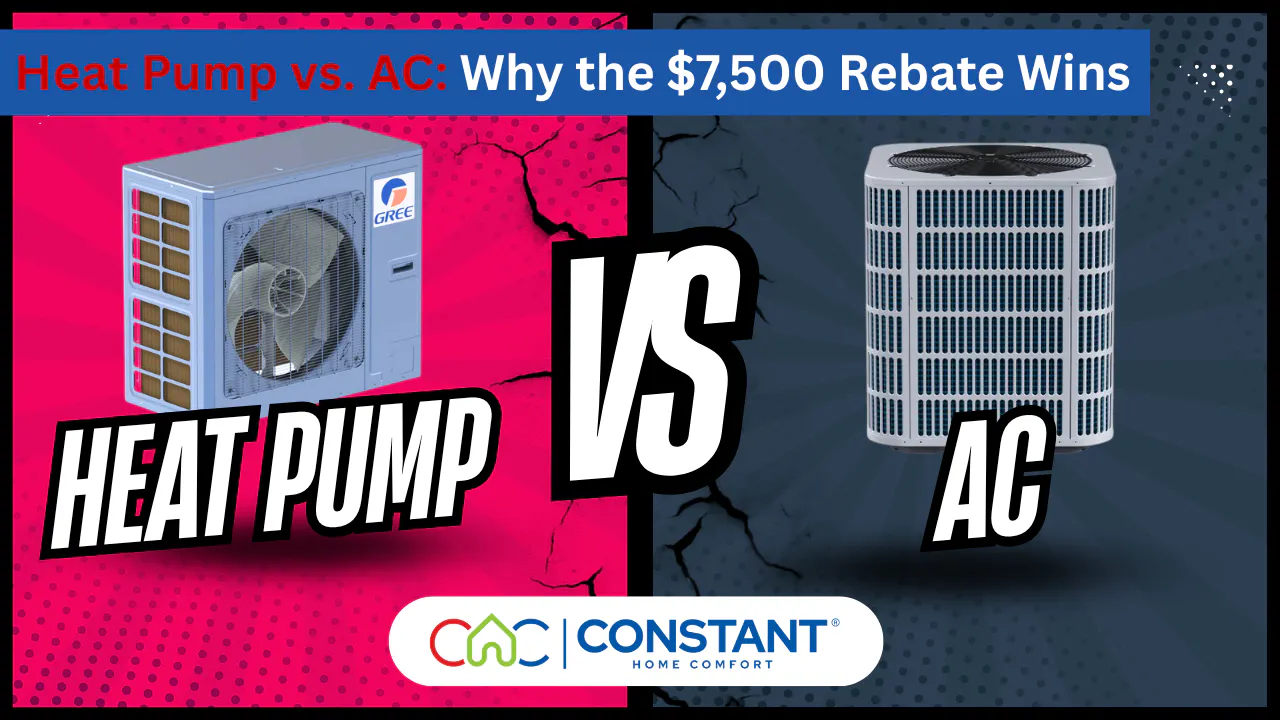
If you are an Ontario homeowner standing at the crossroads of a major home comfort decision in 2026, you aren't just choosing between two metal boxes for your backyard. You are making a strategic financial move that will dictate your utility bills for the next fifteen years. The "Heat Pump vs. Air Conditioner" debate is no longer a matter of personal preference; in the current economic landscape of Ontario, it has become a question of whether or not you want the government to pay for your next major upgrade.
As of May 2026, the traditional central air conditioner is quickly becoming a relic of the past. Why? Because the Home Renovation Savings Program (HRSP) has effectively flipped the script on HVAC pricing. With rebates reaching up to $7,500 for cold-climate heat pumps, the superior technology is now often more affordable than the basic "cooling-only" alternatives.
Whether you are in the freezing winter corridors of Ottawa and Kanata, the humid suburbs of Markham and Richmond Hill, or the industrial hubs of Hamilton and Burlington, the math has changed. Here is exactly why the $7,500 rebate makes the heat pump the undisputed winner for your home.
The Fundamental Shift: Moving Heat vs. Making Heat
To understand why the rebate is so high, we first have to look at what these machines actually do. A standard central air conditioner is a one-trick pony. It uses a refrigeration cycle to pull heat from inside your home and dump it outside. When the first frost hits in places like Barrie or Newmarket, that AC unit sits idle, and your furnace—usually burning expensive natural gas or propane—takes over.
A heat pump, specifically the cold-climate air-source models (ccASHP) installed by Constant Home Comfort, is essentially a high-tech air conditioner with a "reversing valve."
- In the summer, it performs exactly like a high-efficiency AC, keeping your Mississauga or Vaughan home crisp and dry.
- In the winter, it reverses the process. Even when it is -25°C outside in Ottawa, there is still thermal energy in the air. The heat pump extracts that energy, concentrates it, and moves it into your home.
- This process is incredibly efficient. While even the best gas furnace is only about 96% to 98% efficient, a modern heat pump can operate at 200% to 400% efficiency because it is moving heat rather than burning fuel to create it.
Decoding the $7,500 Rebate Opportunity
The headline-grabbing $7,500 figure is part of Ontario’s most aggressive energy efficiency push to date. The Home Renovation Savings Program is a partnership between Save on Energy, Enbridge Gas, and the provincial government designed to get homeowners off carbon-heavy fuels and onto the high-efficiency electrical grid.
However, not every home qualifies for the exact same amount. Your rebate is determined by your current primary heating source:
- Electrically Heated Homes (Baseboards or Electric Furnaces): If you currently use electricity to heat your home, you are the primary target for the highest tier of savings. You can receive $1,250 per ton of equipment capacity, capping at a massive $7,500. For a typical 3-ton home in Scarborough or Durham, that covers a huge portion of the upfront cost.
- Oil, Propane, or Wood Heated Homes: These homes also qualify for the $1,250 per ton rate, up to $7,500. If you are in a more rural area near London or Waterloo and still relying on oil, you can often stack this with the federal Oil to Heat Pump Affordability (OHPA) program, which can bring your total incentives as high as $15,000 to $22,500.
- Natural Gas Heated Homes (Enbridge Customers): If you already have a gas furnace and are just looking to replace your AC, the rebate is lower but still significant. You qualify for $500 per ton, up to a maximum of $2,000. In 2026, many homeowners in the GTA are choosing "Dual-Fuel" setups, where the heat pump handles the heating 90% of the time, and the gas furnace only kicks in during the absolute coldest nights.
The most important update for 2026 is that if you are only installing a heat pump, you no longer need a pre-installation energy audit. This "No-Audit Path" has been a total game-changer, removing the $600 upfront cost and the weeks of waiting for a registered energy advisor to visit your home. You can now move directly to installation with a registered contractor like Constant Home Comfort and still claim your rebate.
The 2026 Carbon Tax Factor: Why AC Is a Liability
The math behind the heat pump win isn't just about the rebate you get today; it's about the taxes you avoid tomorrow. On April 1, 2026, the federal carbon price in Canada rose to $110 per tonne of $CO_2$. This isn't a static number; it is scheduled to hit $170 by 2030.
This tax applies directly to fossil fuels like natural gas, propane, and heating oil. Electricity, which powers your heat pump, is not subject to this same carbon pricing structure.
- By sticking with a standard AC and a gas furnace, you are locking yourself into a decade of rising fuel charges.
- A cold-climate heat pump allows you to bypass the bulk of these charges by shifting your heating load to the more stable electricity grid.
- In 2026, the "economic balance point"—the temperature at which it becomes cheaper to use gas instead of your heat pump—has dropped significantly. Most homeowners find that running their heat pump down to -5°C or even -10°C is now cheaper than using gas because of the carbon tax and improved system efficiency.
Regional Realities: How We Serve Your Specific City
Constant Home Comfort has a massive footprint across Ontario, and we know that a "one size fits all" approach doesn't work when you're dealing with the diverse climates of this province. The way we install a system in Kanata is very different from how we approach a project in Hamilton.
- Ottawa and Kanata: These are our "Cold-Climate Kings." With winters regularly hitting -30°C, we only recommend systems like the GREE FLEXX or top-tier Lennox units. These systems are specifically engineered to maintain their heating capacity even when the thermometer bottom outs. For Ottawa residents, we often help navigate the "Better Homes Ottawa" loan program, which provides low-interest financing that stays with the property.
- Markham, Richmond Hill, and Vaughan: In these densely populated GTA suburbs, the main concern after efficiency is noise. Traditional air conditioners are loud and can be a nuisance to neighbors. The heat pumps we install, such as the side-discharge models from GREE, operate as low as 45 dB(A). That is essentially the sound of a quiet conversation.
- Hamilton and Burlington: Many homes in the "Lower City" or near the beach strip deal with high humidity levels from the lake effect. Standard single-stage ACs are terrible at dehumidification because they blast cold air and then stop. Modern inverter heat pumps run for longer, lower-intensity cycles, which allows them to pull massive amounts of moisture out of the air, making your home feel much cooler at a higher temperature.
- London and Waterloo: As tech and university hubs, these regions are focused on the long-term ROI. We provide detailed load calculations for homeowners here to show exactly how many years it will take for the $7,500 rebate and annual energy savings to pay for the system entirely—usually between 3 to 6 years.
- Barrie and Newmarket: Serving as the gateway to the north, these areas have longer heating seasons. For homes here that are not on the natural gas grid, the switch from electric baseboards to a heat pump is life-changing, often cutting winter electricity bills by more than 50%.
The Technology of Comfort: Variable-Speed Inverters
The "secret sauce" of the 2026 heat pump is the variable-speed inverter compressor. If you have an older AC or furnace, you know the "blast and stop" cycle. The system turns on at 100% power, blows cold (or hot) air until the thermostat is satisfied, and then shuts off. This creates hot and cold spots and uses a massive amount of energy to "surge" the system back to life.
A variable-speed heat pump is more like a dimmer switch than a light switch. It can run at 20%, 50%, or 100% capacity depending on exactly what your home needs at that moment.
- Precision Temperature Control: No more fluctuating between 21°C and 23°C. The system finds the "sweet spot" and stays there.
- Better Air Quality: Because the system runs for longer cycles at a lower speed, your air is constantly being moved through your filters and air purifiers.
- Longevity: Most 2026-era heat pumps are rated for 15 to 20 years. Because they don't constantly cycle on and off, there is less mechanical stress on the compressor and the electrical components.
Why Constant Home Comfort Is Your "One-Stop Shop"
The biggest hurdle for most homeowners isn't the technology—it's the paperwork. Navigating the Home Renovation Savings Program, checking model numbers against the Natural Resources Canada (NRCan) qualified products list, and ensuring you meet the registration deadlines (May 31, 2026) can be overwhelming.
At Constant Home Comfort, we have built our business model around making this "easy and stress-free."
- We Handle the Paperwork: When we say we're a one-stop shop, we mean it. We verify your eligibility, ensure the equipment model qualifies for the maximum rebate, and even handle the submission process on your behalf.
- Precision Sizing: One of the most common issues on Reddit and homeowner forums is people complaining about "short-cycling." This usually happens because a contractor just guessed the size of the unit based on the old one. We perform a full Manual J load calculation, looking at your windows, insulation, and the square footage of your home to ensure the tonnage is perfect.
- 24/7 Support: We know that HVAC issues don't happen on a 9-to-5 schedule. Our phone lines are open every day of the year, and we have local technicians stationed across the GTA, Hamilton, Ottawa, and London to ensure we can respond to emergencies in hours, not days.
- Direct Sourcing: Because we source our equipment directly from manufacturers like Lennox, GREE, and Goodman, we can often layer manufacturer promotions on top of your $7,500 rebate, driving your net cost even lower.
Future-Proofing Your Home Value
If you are planning on selling your home in the next five to ten years, a high-efficiency heat pump is one of the best investments you can make for resale value. As energy prices continue to rise and the carbon tax becomes a larger part of the average household budget, savvy buyers are looking for "all-electric" or "hybrid" homes.
A home in Newmarket or Vaughan with a 20-SEER2 cold-climate heat pump is a premium asset. It signals to the buyer that the home is modern, energy-efficient, and protected against future fossil fuel price hikes. In fact, current real estate trends in Ontario suggest that homes with these high-efficiency upgrades can command a 4% to 6% premium over homes with aging, conventional systems.
Addressing the Myths: Can They Really Handle -30°C?
We still hear from skeptical homeowners in Ottawa and Barrie who remember the heat pumps of the 1990s. Those early units were designed for the Southern United States and would freeze up the moment a Canadian winter arrived.
The technology of 2026 is a different beast entirely.
- ccASHP Certification: To qualify for the $7,500 rebate, a system must be certified as a "Cold Climate" unit. These are tested to operate efficiently at -15°C and continue providing heat down to -30°C.
- Defrost Cycles: Modern units have sophisticated sensors that can detect frost buildup on the outdoor coil and run a brief "defrost cycle" to melt it away without interrupting your indoor comfort.
- Backup Integration: For total peace of mind, we often install these systems as part of a "Dual-Fuel" strategy. Your high-efficiency gas furnace stays in place to act as a "backup" or "emergency" heat source. If the temperature drops to a record-breaking -35°C or if there is a massive spike in electricity rates, the system can automatically switch over to gas to keep you safe.
The Financial Verdict: The Cost Breakdown
When you look at the raw numbers, the "Standard AC" starts to look like a very expensive "bargain."
- Initial Cost: A standard central AC might cost you $4,000 to $6,000. It comes with zero rebates and only solves half of your comfort problem (cooling).
- Heat Pump Cost: A high-end cold-climate heat pump might have a sticker price of $10,000 to $14,000.
- The Rebate Impact: Once you apply the $7,500 rebate (for non-gas homes), your net cost drops to $2,500 to $6,500.
- The Result: You are getting a world-class heating AND cooling system for roughly the same price—or even less—than a basic air conditioner.
When you add in the $700 to $1,000 in annual energy savings and the avoidance of the rising carbon tax, the heat pump is the clear winner for any rational homeowner.
Conclusion: Don't Leave Money on the Table
The $7,500 rebate through the Home Renovation Savings Program is not a permanent fixture of the Ontario landscape. Historically, programs like the Greener Homes Grant and GreenON have closed without warning once their funding was depleted. The current registration window for the 2026 season is set to close on May 31, 2026.
If your air conditioner is more than 10 years old, or if your furnace is starting to show its age, now is the time to act. You have a rare opportunity to let provincial and federal incentives foot the bill for a system that will make your home more comfortable, more valuable, and much cheaper to run.
Constant Home Comfort is ready to help you navigate this transition. From Markham to Kanata, and London to Barrie, our team is on standby to provide a no-obligation quote and a full rebate eligibility check. Don't let another sweltering summer or a high-tax winter pass you by.