 Work Time
If you're a homeowner in Ontario looking for a smarter, more energy-efficient way to heat your water, a heat pump water heater could be the upgrade that pays for itself. These systems are quickly becoming one of the most popular choices for Canadian households — and for good reason. In this guide, Constant Home Comfort walks you through exactly how they work, why they're so efficient, and how you can take advantage of government rebates available right here in Ontario.
A heat pump water heater (HPWH) is an electric water heater that does not generate heat directly. Instead, it moves heat from the surrounding air into the water stored in the tank. Think of it as a refrigerator working in reverse — rather than pulling heat out of a cold space, it pulls heat from the ambient air and transfers it into the water.
This process is dramatically more efficient than traditional electric resistance water heaters. Where a conventional electric heater converts one unit of electricity into one unit of heat, a heat pump water heater can deliver two to four units of heat for every unit of electricity consumed. That efficiency is measured by the Energy Factor (EF) or Uniform Energy Factor (UEF), and HPWHs consistently rank at the top of both scales.
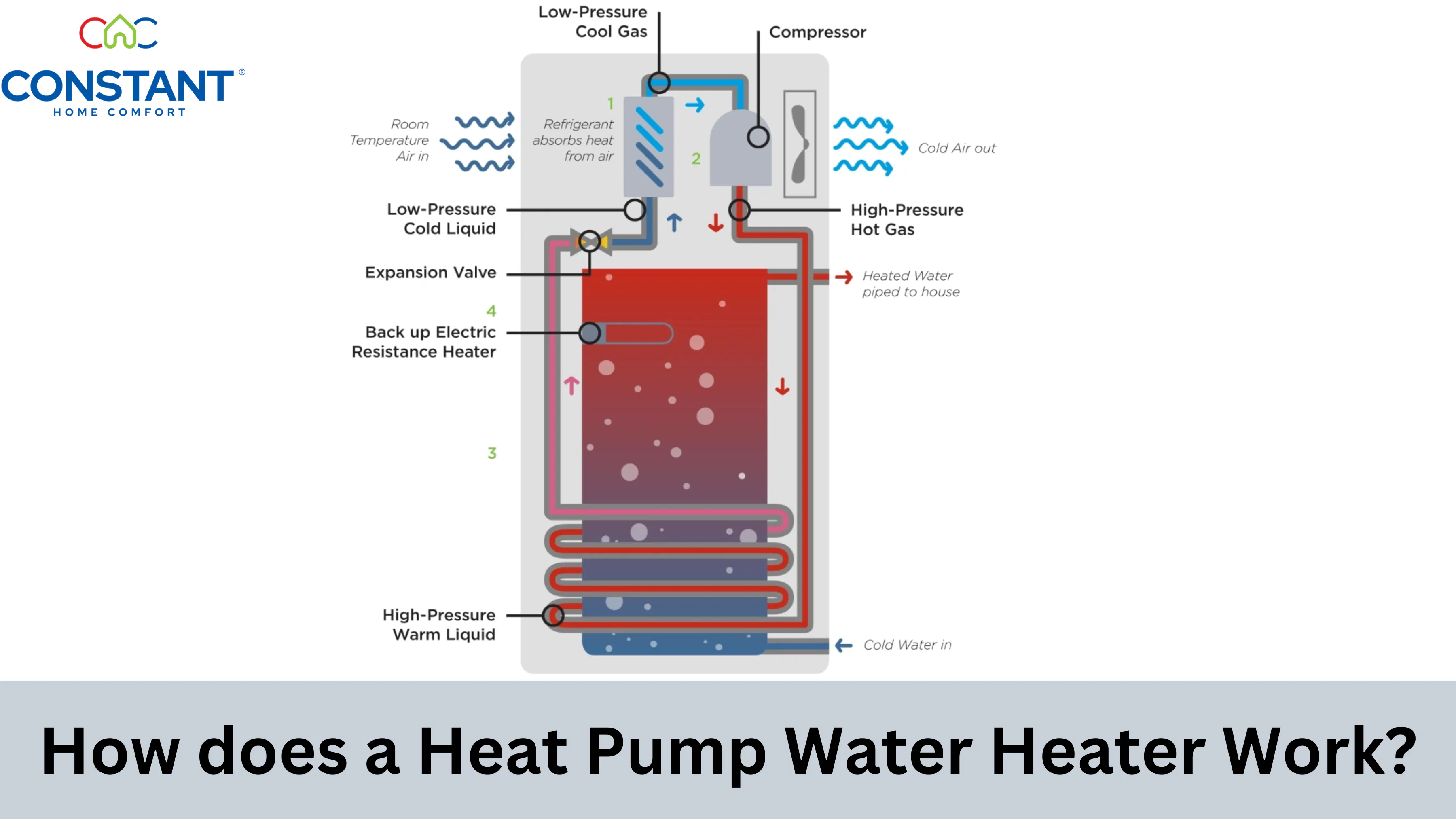
Understanding the process is easier when you break it into its four main stages:
Step 1: Drawing in Warm Air
The heat pump unit sits on top of the water storage tank and features a built-in fan. This fan continuously draws ambient air from the surrounding room — your basement, utility room, or garage — across a set of evaporator coils filled with refrigerant.
Step 2: Absorbing Heat Through the Refrigerant
Even on cool days, the surrounding air contains thermal energy. As air passes over the evaporator coils, the liquid refrigerant inside absorbs that heat energy and evaporates into a gas. The cooler air is then expelled back into the room.
Step 3: Compressing the Refrigerant
The refrigerant gas moves into a compressor, which increases the pressure and temperature of the gas significantly. This is the core of the heat pump process — compression concentrates the thermal energy so it can be efficiently transferred to the water.
Step 4: Transferring Heat to the Water
The hot, high-pressure gas then flows through a condenser coil wrapped around or submerged inside the water tank. The heat passes from the refrigerant into the water, warming it to your desired temperature. As the refrigerant releases its heat, it cools back into a liquid and the cycle begins again.
Most heat pump water heaters also include electric resistance backup heating elements, which kick in automatically during periods of very high demand or when the ambient temperature drops too low for the heat pump to operate efficiently on its own.
Here is how the two technologies compare across the factors that matter most to Ontario homeowners:
- Energy Efficiency: Heat pump water heaters use 60–70% less electricity than standard electric resistance units, resulting in significantly lower monthly energy bills.
- Operating Costs: The higher purchase and installation cost of an HPWH is typically recovered within three to five years through energy savings — especially with Ontario rebates applied.
- Lifespan: With fewer heating elements under heavy strain, HPWHs often experience less wear and can last fifteen or more years with proper maintenance.
- Environmental Impact: Because the heat pump expels cooled, dehumidified air into the installation space, HPWHs can actually help reduce cooling loads in your home during summer months.
- Space Requirements: HPWHs need a space with adequate airflow — typically at least 700 to 1,000 cubic feet of surrounding air. Basements and utility rooms in most Ontario homes are well-suited for this.
Ontario's energy costs and climate make heat pump water heaters a particularly smart investment. Here is what homeowners across the GTA, Hamilton, Ottawa, and Barrie are experiencing after switching:
- Substantial Annual Savings: Energy bills for water heating can drop by $400 to $600 per year compared to a standard electric tank, depending on household size and usage habits.
- Reduced Environmental Footprint: HPWHs produce zero direct greenhouse gas emissions, supporting Ontario's clean energy goals and reducing your home's carbon footprint.
- Improved Indoor Safety: Unlike gas water heaters, HPWHs require no gas line, produce no combustion byproducts, and eliminate the risk of carbon monoxide exposure.
- Eligible for Government Rebates: As the technology becomes more mainstream, government rebate programs in Ontario currently offer meaningful incentives to offset the upfront cost.
- Smart Operating Modes: Most units offer multiple operating modes — efficiency mode, hybrid mode, and electric-only mode — allowing you to customize performance for your household schedule.
A heat pump water heater is an excellent fit for most Ontario homes, but there are a few factors worth checking before you commit:
- Available Space: The unit requires a minimum of 700 to 1,000 cubic feet of unconditioned or semi-conditioned air space. Most Ontario basements meet this comfortably.
- Ambient Temperature: The heat pump performs best in spaces where temperatures remain between 4°C and 32°C. A basement utility room typically stays within this range year-round.
- Noise Considerations: HPWHs run quieter than many appliances but do produce a low hum during operation. Placement away from bedrooms is usually recommended.
- Electrical Requirements: The unit requires a standard 240V electrical outlet. If your home currently uses a gas water heater, your electrician may need to add a dedicated circuit.
- Condensate Drainage: A floor drain nearby is recommended, as heat pump water heaters can produce condensation during normal operation.
If you're unsure whether your home qualifies, Constant Home Comfort offers in-home assessments across Ontario with no-obligation quotes.
One of the biggest advantages of switching to a heat pump water heater in Ontario right now is the availability of government rebate programs. Through initiatives like the Canada Greener Homes Grant and the Home Efficiency Rebate Plus (HER+) program, eligible Ontario homeowners may qualify for rebates that significantly reduce the net cost of installation.
Rebate amounts and eligibility requirements change periodically, so it is important to confirm current program details. Constant Home Comfort stays up to date on all available incentives and will walk you through exactly what you qualify for — including how to combine provincial and federal programs for maximum savings.
Our team handles the paperwork so you don't have to. We make the rebate process as simple and straightforward as possible for homeowners across the GTA, Ottawa, Hamilton, London, Barrie, and Waterloo regions.
Constant Home Comfort has been helping Ontario homeowners upgrade to smarter, more efficient home systems for years. When you choose us for your heat pump water heater installation, you get:
- Fully Disclosed Pricing: Our pricing is fully transparent — no surprise fees, no hidden charges.
- 0% Financing Available: We offer flexible 0% financing plans so you can start saving immediately without a large upfront payment.
- Certified, Experienced Technicians: Our certified technicians have hands-on experience with heat pump water heater installation across all major Ontario markets.
- Province-Wide Service: We are active in Toronto, the GTA, Ottawa, Hamilton, Barrie, London, Waterloo, Burlington, and beyond.
- Rebate Application Support: Our team keeps you fully informed throughout the rebate application process so you never leave money on the table.
How long does it take for a heat pump water heater to pay for itself?
For most Ontario households, the payback period is between three and five years after rebates are applied. After that point, you are essentially getting free savings every year compared to running a conventional electric tank.
Can a heat pump water heater work in a cold basement in Ontario?
Yes — most modern heat pump water heaters are designed to operate in temperatures as low as 4°C, which covers the vast majority of Ontario basement environments throughout the year. The built-in electric resistance backup ensures you always have hot water, even on the coldest days.
How much does installation cost?
Installation costs vary based on your home's existing setup, electrical panel capacity, and the specific unit selected. Constant Home Comfort provides fully transparent quotes with all costs disclosed upfront. Contact us to get your personalized estimate.
Do heat pump water heaters work with solar panels?
Absolutely. Heat pump water heaters are an ideal complement to a residential solar system. Running your HPWH during peak solar production hours can reduce your net energy costs even further — a combination that makes exceptional financial sense for Ontario homeowners.
A heat pump water heater is one of the most cost-effective and environmentally responsible upgrades you can make to your Ontario home. With government rebates, flexible financing, and expert installation from a team you can trust, there has never been a better time to get started.
Call us at 1 (888) 675-5907 or book your in-home appointment online. One of our certified comfort advisors will assess your home, walk you through your options, and help you claim every rebate you're entitled to — at no obligation to you.