 Work Time
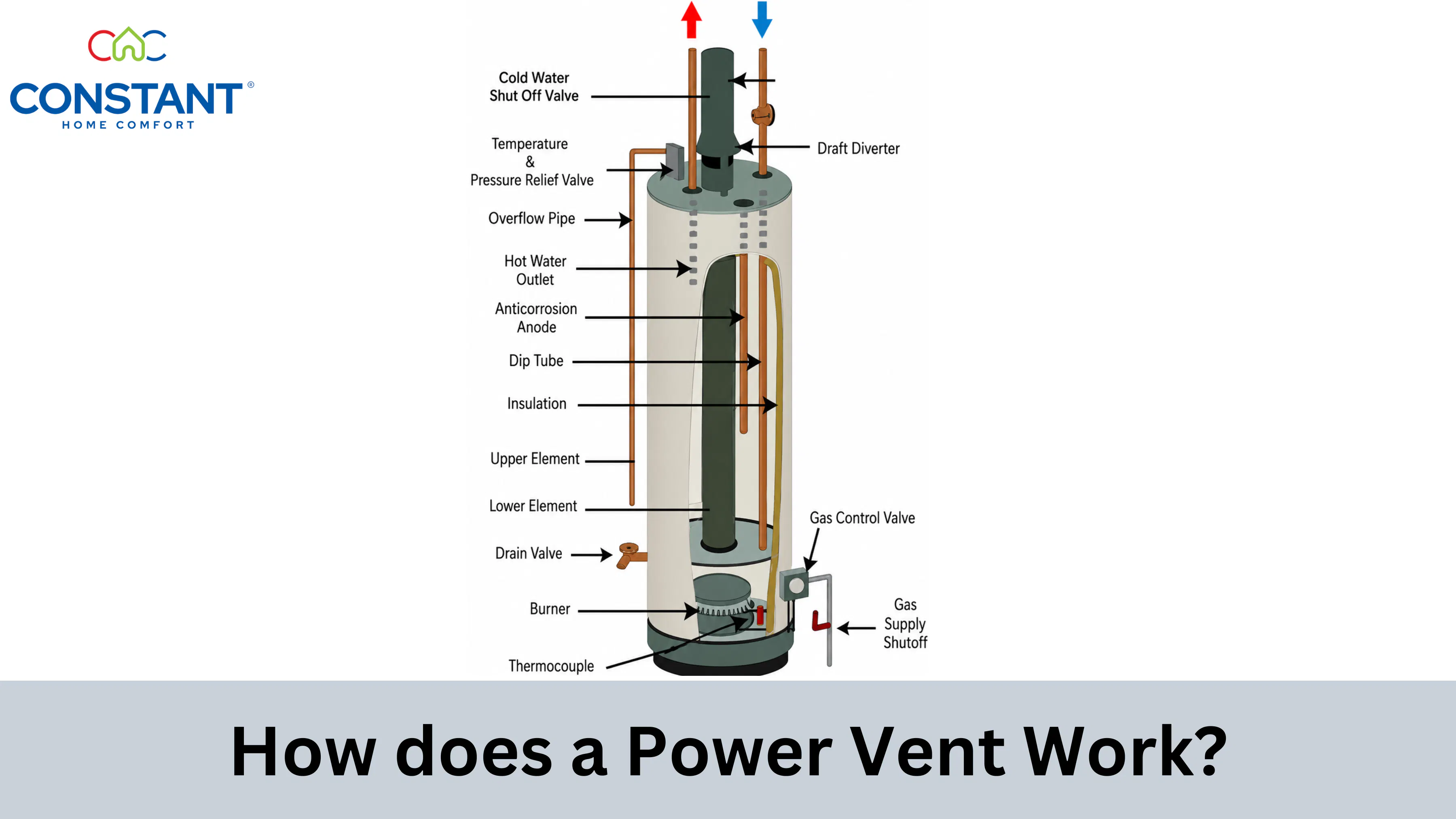
A power vent is a type of venting system used in gas-powered appliances — most commonly water heaters and furnaces — that uses an electric blower fan to push combustion gases out of your home. Unlike a natural draft system, which relies on heat rising to expel exhaust through a vertical flue, a power vent actively moves those gases through a horizontal or vertical vent pipe to the outside.
This makes power vent appliances far more flexible in terms of where they can be installed in your home — a major advantage for modern builds and renovation projects across the GTA.
Here’s what happens inside a power vent system every time it fires up:
- Burner Ignition: The gas burner inside your water heater or furnace ignites, beginning the combustion process.
- Blower Fan Activates: An electric blower fan (also called an inducer motor on furnaces) turns on simultaneously. This fan creates a steady, controlled airflow through the heat exchanger or combustion chamber.
- Combustion Gases Are Pushed Out: The fan forces the exhaust gases — carbon dioxide, water vapour, and other byproducts — through a dedicated vent pipe that exits through an exterior wall or the roof.
- Fresh Air Intake: Many power vent systems draw combustion air directly from the room (indoor air) or from a separate intake pipe from outside. The choice depends on the specific appliance and your home’s configuration.
- Safety Controls Monitor the System: Pressure switches and sensors confirm the blower is operating correctly before allowing the burner to stay on, ensuring safe and reliable operation every cycle.
It helps to understand how power vent compares to the other two common venting options:
Natural Draft (Atmospheric Vent)
The oldest and most basic method. Relies entirely on the natural buoyancy of hot gases rising through a vertical flue pipe. Requires a vertical chimney or flue, limiting where the appliance can be placed. Less efficient and increasingly uncommon in modern Ontario homes.
Power Vent
Uses an electric fan to push exhaust out. Can vent horizontally, meaning the appliance can be installed almost anywhere in your home — a basement, utility room, or even a closet — as long as there’s access to an exterior wall. Requires electricity to run the blower, but installation flexibility and safety make it a top choice for most Canadian homes.
Direct Vent (Sealed Combustion)
A sealed system that pulls combustion air directly from outside and vents exhaust outside through a coaxial (pipe within a pipe) or dual-pipe system. Maximum efficiency and safety since indoor air is never used for combustion. Often the most efficient option, typically found in high-efficiency condensing furnaces.
Power vent water heaters are among the most popular choices for Ontario homes, especially those without a traditional chimney. Here’s why they stand out:
- The tank heats water using a gas burner at the bottom of the tank.
- A blower motor on top of the unit pushes combustion gases through a PVC or ABS plastic vent pipe (instead of the metal flues used in natural draft units).
- The vent pipe can run horizontally through a basement wall, giving you freedom to place the water heater almost anywhere.
- Models are available in standard and high-efficiency ratings, with Energy Factor (EF) ratings clearly listed to help you compare operating costs.
In mid-efficiency furnaces (typically 80% AFUE), the power vent — or induced draft blower — plays a critical role in the heating cycle:
- The inducer motor starts before ignition, confirming the flue path is clear.
- Gas ignites and the heat exchanger warms up.
- The inducer motor continuously pulls exhaust gases through the heat exchanger and pushes them out through the flue.
- Pressure switches verify proper airflow throughout the entire cycle.
- The main blower then circulates the warmed air through your home’s duct system.
In high-efficiency condensing furnaces (90%+ AFUE), a similar but even more advanced process extracts additional heat from the exhaust, producing a cooler flue gas that can be safely vented through PVC pipe — one of the reasons these systems are so efficient and so common in Ontario’s cold climate.
Installation Flexibility
One of the biggest advantages of power vent systems is that they don’t require a vertical chimney. The vent pipe can run horizontally and exit through virtually any exterior wall, making them ideal for homes without an existing flue or for renovations where a traditional chimney is not practical.
Improved Safety
Because the blower actively controls exhaust flow, the risk of backdrafting — where combustion gases flow back into your living space — is significantly reduced compared to natural draft systems. This is a major safety benefit in well-sealed, modern homes across the GTA.
Reliable Performance in Cold Weather
Ontario winters are no joke. Power vent systems operate consistently even in extremely cold temperatures, unlike natural draft systems that can be affected by weather conditions that reduce the natural buoyancy of exhaust gases.
Energy Efficiency Options
Power vent appliances are available in a wide range of efficiency ratings. Pairing a power vent water heater or furnace with available government rebates in Ontario can significantly offset your upfront investment — and lower your monthly energy bills for years to come.
A power vent system is likely a great fit if:
- Your home doesn’t have a traditional chimney or vertical flue.
- You’re replacing an older natural draft appliance and want improved safety and performance.
- Your utility room or furnace space is in a location where running a vertical flue would be difficult or expensive.
- You’re looking for a reliable, code-compliant solution approved for Ontario homes.
- You want access to government rebates on qualifying high-efficiency models.
Our Constant Home Comfort advisors can assess your home’s current setup and recommend the best venting solution for your specific situation — whether that’s power vent, direct vent, or a high-efficiency condensing system.
Power vent systems are reliable, but like any mechanical system, they benefit from regular maintenance:
- Annual inspections: Have a licensed HVAC technician inspect the blower motor, vent pipes, and pressure switches every year.
- Keep vents clear: Ensure the exterior vent termination is free of snow, ice, debris, or bird nests — a common issue during Ontario winters.
- Listen for unusual sounds: A rattling or grinding blower motor is often an early warning sign. Don’t ignore it.
- Check error codes: Most modern power vent appliances have diagnostic lights or digital displays. If you see a fault code related to the pressure switch or inducer motor, call a professional promptly.
Can a power vent water heater work without electricity?
No. Because the blower motor requires electricity to operate, a power vent water heater will not function during a power outage. If backup hot water during outages is a concern, discuss your options with one of our specialists.
How long do power vent water heaters last?
With proper maintenance, a power vent water heater typically lasts 10 to 15 years. Regular annual inspections and flushing sediment from the tank can help extend its lifespan.
Is a power vent louder than a natural draft system?
Power vent appliances do produce some noise from the blower motor — similar to a quiet fan. Most homeowners find this completely acceptable, especially given the safety and installation advantages. High-quality models from brands like Rinnai are designed to minimize operational noise.
What kind of pipe does a power vent use?
Most power vent systems use either PVC or ABS plastic pipe for venting because the exhaust gases are cooler than those from natural draft systems. This also makes power vent installation more affordable than metal flue systems.
Whether you’re replacing a failing water heater, upgrading an aging furnace, or simply exploring your options, the team at Constant Home Comfort is here to help. We serve Toronto, GTA, Hamilton, Ottawa, and communities across Ontario with transparent pricing, expert installation, and access to government rebates that can dramatically reduce your out-of-pocket costs.
Our certified technicians will assess your home, walk you through your best power vent options, and ensure everything is installed to code — the first time.
📞 Call us today: 1 (888) 675-5907
💻 Book online: constanthomecomfort.com
Get a free quote, check your rebate eligibility, and take the first step toward a safer, more efficient home.